
8 years in, here’s what I wish someone had told me about building habits that stick, not just for your students, but for you.
By Muneeb Farooq · March 2026 · 8 min read
Let me be upfront with you: when I first started tutoring, I thought my job was just to explain things clearly. Sit down, go through the topic, answer questions, collect the fee, repeat. Simple enough, right?
Wrong. After a few years, I started noticing a pattern. The students who were improving the fastest weren’t the smartest ones in the room. They were the ones whose tutors had their own act together. Their tutors came prepared, reflected on lessons, kept notes, and had a system. The chaos a tutor carries into a session quietly spills onto the student.
So this isn’t just about study habits in the traditional sense. It’s about the habits that make you a sharper, more effective, more trustworthy tutor — and eventually, someone students genuinely remember.
“You cannot consistently give what you don’t consistently practice. Your habits are your lesson plan, whether you realise it or not.”
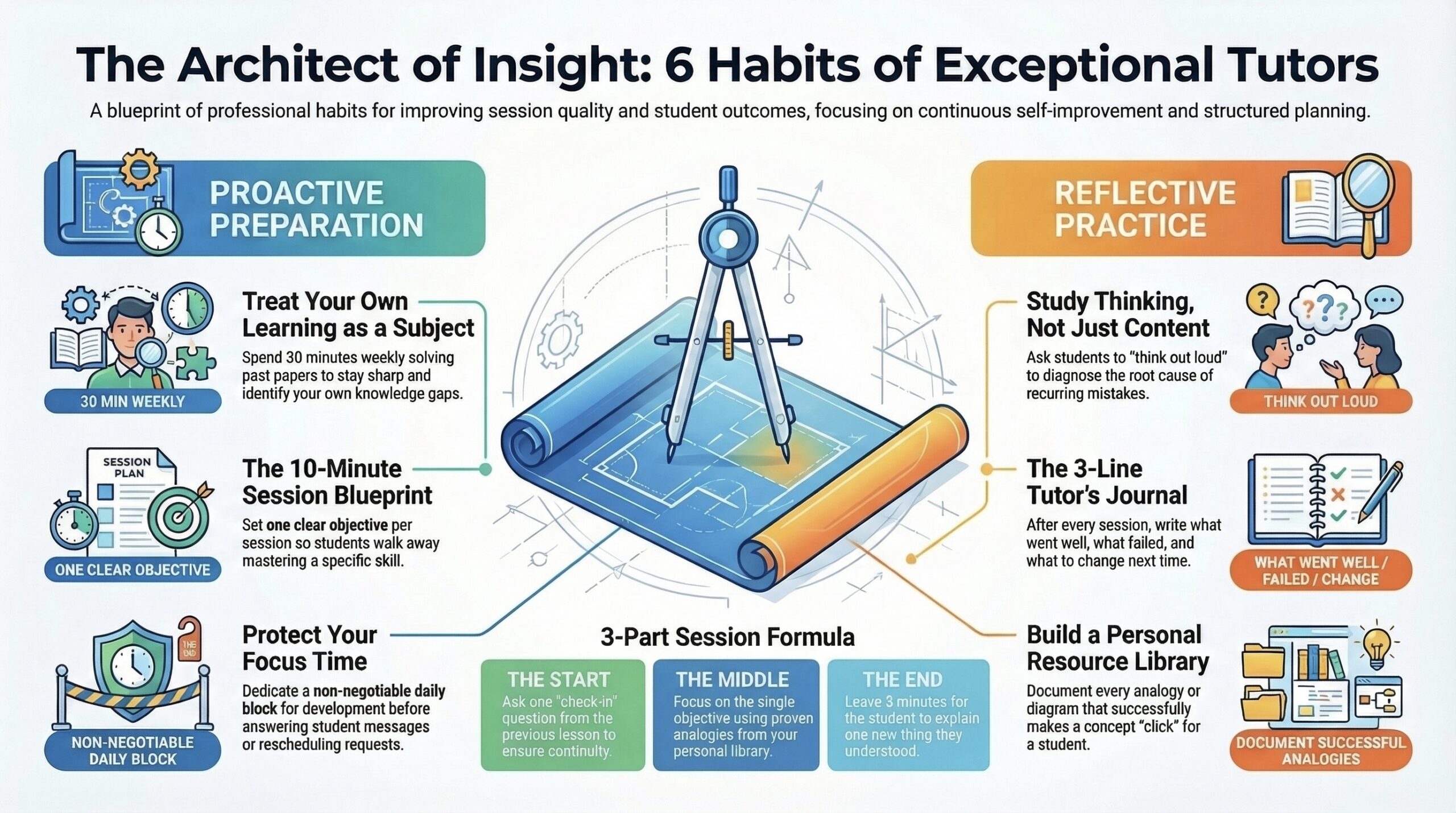
1. Treat Your Own Learning Like a Subject
This is the one most aspiring tutors skip entirely. You’re so focused on your students’ progress that you forget to track your own. But here’s the thing: the subject you teach is alive. Syllabuses change. Exam board mark schemes shift. New questions appear every year.
I spend at least 30 minutes a week going through past papers myself, not to teach them, but just to stay sharp. I sit with a Physics question, work it properly, and notice where my thinking gets lazy. That 30 minutes has saved me from embarrassing moments in front of students more times than I can count.
What this looks like in practice:
Pick one topic per week and go deep on it. Not surface-level revision. Actually work through it like a student would, under mild pressure, without your notes open. You’ll quickly discover the gaps you didn’t know you had.
2. Plan the Session Before the Session
I used to walk into lessons with a vague idea of what we’d cover. “We’ll do forces today.” Fine. But vague plans produce vague results. Now I spend 10 minutes the evening before writing down exactly what I want the student to walk away knowing, and what specific activity will get us there.
Here’s my simple 3-part session formula:
One clear objective per session Not three. Not five. One thing the student should be able to do by the end that they couldn’t do at the start.
A check-in question at the start One quick question from last session. No warm-up small talk until they’ve answered it. This signals that your sessions have continuity.
Leave 5 minutes for reflection End every session by asking the student: “What’s one thing you understood today that you didn’t before?” Forces consolidation on both ends.
3. Keep a Tutor’s Journal
After each session, write three lines. What went well, what didn’t land, and what you’d do differently. That’s it. Three lines. Do it consistently for a month and you’ll have a pattern. You’ll see which explanations keep failing, which students need a different approach, and where you’re actually improving.
I use a simple notes app on my phone. Nothing fancy. But going back through six months of entries is one of the most honest mirrors I have as a professional.
4. Build a Personal Resource Library
Every time you explain something in a way that really clicks, write it down. Every analogy that works. Every way of drawing a diagram that a student finally understood. Over time, this becomes your most valuable teaching asset, worth far more than any textbook.
I’ve been building mine for years. Specific explanations for tricky Physics concepts, common misconceptions per topic, the exact wording that helps students distinguish between similar ideas. When I sit down with a new student, I’m not starting from scratch. I’m drawing from a library I’ve built deliberately.
5. Protect Your Focus Time
Tutoring can feel like it’s always on. Messages at odd hours, last-minute rescheduling requests, students texting you the night before an exam in a panic. I’ve been there. And if you don’t build boundaries around your own focused work time, it all bleeds into everything.
I now have a dedicated block every morning, before any sessions, before checking messages, where I work on my own development. Whether that’s preparing materials, studying, or planning content. It’s non-negotiable. Even 45 minutes of protected, focused time each day will compound into something significant over a year.
6. Study How Your Students Think, Not Just What They Learn
This one took me a while to appreciate. Understanding the Physics is one thing. Understanding why a 16-year-old consistently makes the same mistake on a particular type of question is a completely different skill. And it’s the skill that separates average tutors from exceptional ones.
When a student gets something wrong repeatedly, I now pause and ask them to walk me through their thinking out loud. Most of the time, the error isn’t carelessness. It’s a specific misconception that needs to be addressed at the root. Research consistently shows that diagnosing and addressing misconceptions is one of the highest-impact strategies a teacher can use. You can’t fix what you haven’t diagnosed.
“The best tutors I’ve seen don’t just teach the subject. They teach themselves how their students think.”
One Last Thing
Building habits is slow. It doesn’t feel like progress for a while, and that’s the part that trips most people up. You do the prep, write the notes, review the session, and wonder if it’s making any difference. It is. It just takes time to see.
A research-backed source on habit building: James Clear’s Atomic Habits
The tutors who last, who build real reputations and real results, are the ones who treat their own development with the same seriousness they ask of their students. Your habits are always showing. Make sure they’re showing something worth seeing.
If any of this resonated with you, I’d genuinely like to hear where you’re at in your tutoring journey. Feel free to reach out or leave a comment below.
Until next time, Muneeb
Looking for one-to-one tutoring in Physics, Chemistry or Maths? I work with GCSE, IGCSE and A Level students worldwide. Book a free consultation here.
Blog
This section provides an overview of the blog, showcasing a variety of articles, insights, and resources to inform and inspire readers.
-

5 Powerful IGCSE Physics Topics to Master Before May
Spread the loveEight weeks out. Here are the five Physics topics most likely to cost…
-
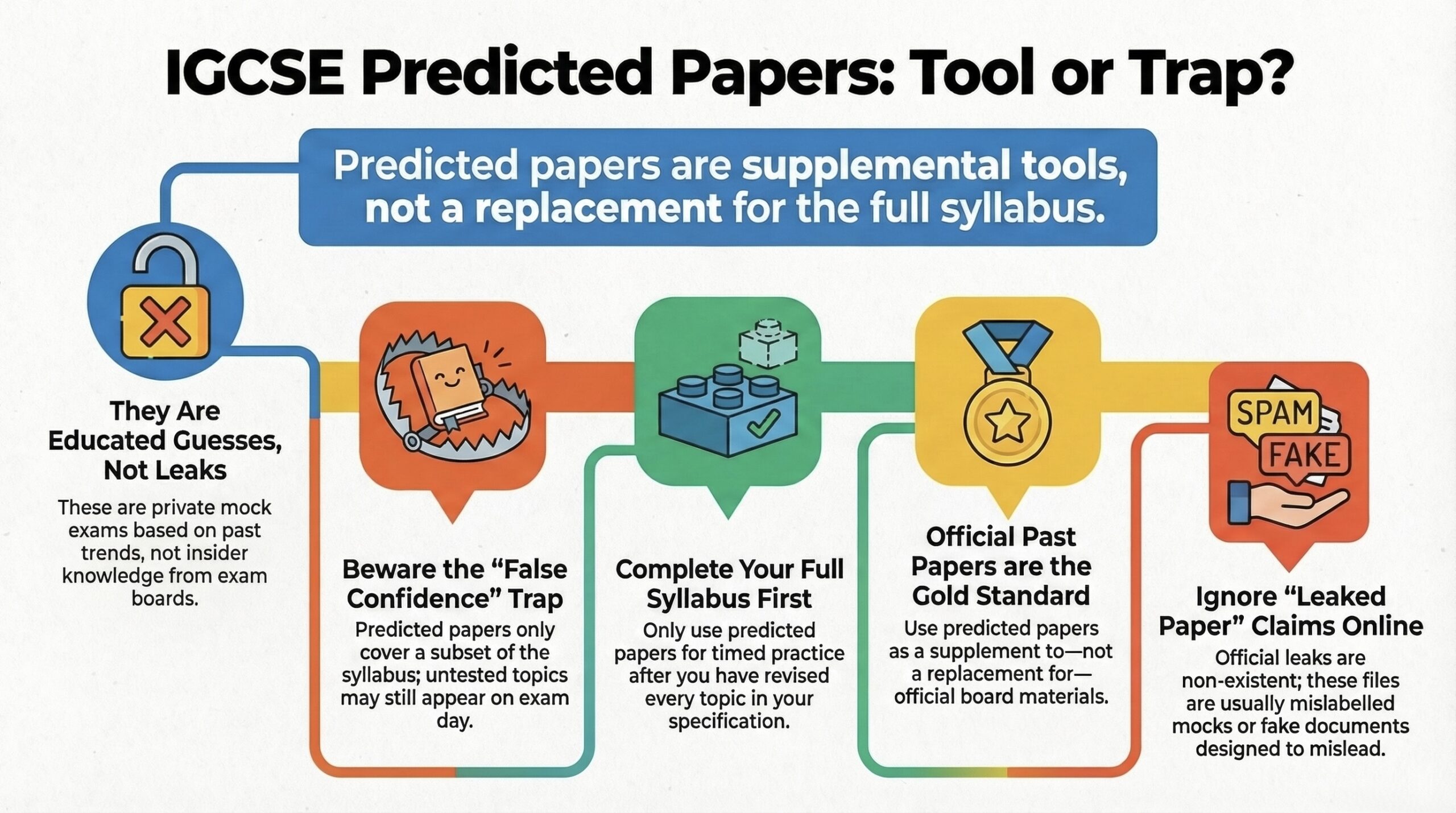
Are Predicted Papers Worth It? Honest IGCSE 2026 Truth
Spread the loveEvery student is searching for them right now. But do predicted papers actually…
-

War Abroad, Schools Closed at Home: What Pakistani Students Must Do Now
Spread the lovePunjab has shut all schools until 31 March 2026. Your exams have not…

Leave a Reply