
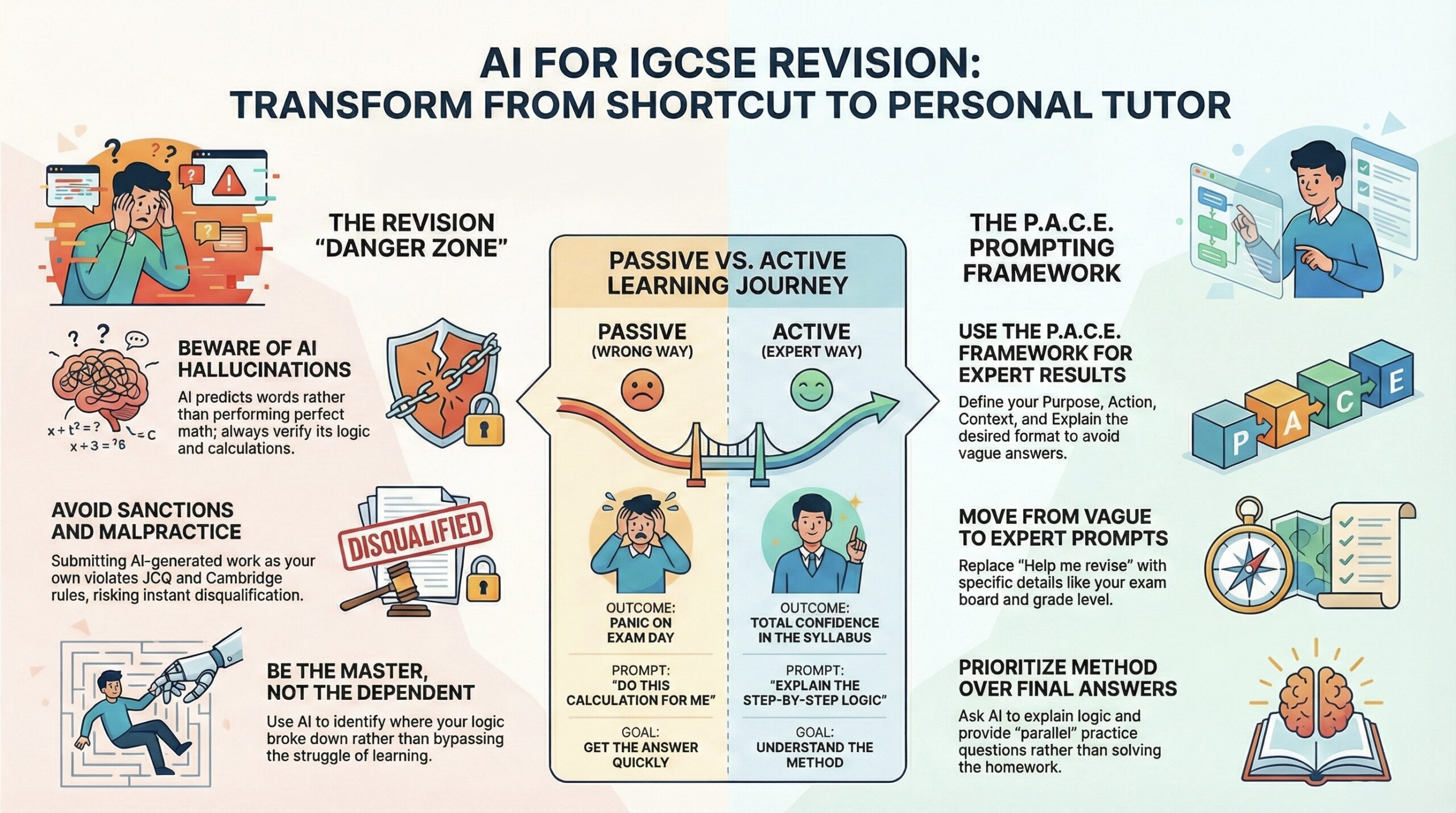
Artificial intelligence is completely changing the way we study. Whether you are tackling IGCSE Physics, O-Level Chemistry, or GCSE Mathematics, tools like ChatGPT and Gemini can be incredible assets.
But there is a catch.
Right now, 90% of students are using AI incorrectly. They are using it as a shortcut to do their homework, which bypasses the actual learning process. When exam day arrives and the screens are put away, these students panic.
In this guide, I will show you how high-performance students use AI as a 24/7 personal tutor, how to write the perfect prompts for STEM subjects, and the malpractice traps you absolutely must avoid.
1. Why You Should Use AI (The Right Way)
Traditional revision methods (like passively reading textbooks or endlessly highlighting notes) do not build long-term memory. To succeed in your exams, you need active engagement.
- Simplifying Complex Concepts: If you are struggling with a difficult topic, you can ask an AI chatbot to break it down. Using the “Feynman Technique,” ask the AI to explain a concept to you as if you were 10 years old. This reduces your cognitive load and builds foundational understanding before you tackle the complex textbook definitions.
- Instant Feedback: Instead of waiting days for a teacher to mark a practice calculation, AI tools can offer immediate, step-by-step critiques of your workings, pointing out exactly where you dropped a method mark.
Action Step: Next time you are stuck on a Physics concept, type this into an AI: “Explain Newton’s Third Law to me using a real-world example of playing football, and keep it under 100 words.”
2. Step-by-Step: How to Prompt Like an Expert
If you type a vague question into ChatGPT, you will get a vague, useless answer. To get premium revision material, use the P.A.C.E. framework: Purpose, Action, Context, and Explain.
- Purpose: Tell the AI why you are asking (e.g., to review, practice, or brainstorm).
- Action: Tell the AI exactly what to do (e.g., summarize, create a quiz, find the error).
- Context: Provide specific details (e.g., your exam board, your grade level, the topic).
- Explain: Specify how you want the answer formatted.
Example of a poor prompt: “Help me revise Circle Theorems.”
Example of an expert P.A.C.E. prompt: “I am a GCSE Maths student studying the Edexcel specification. Create 5 challenging practice questions based on Circle Theorems. Do not show me the answers right away. Ask me one question at a time, wait for my calculation, and then tell me if I am correct based on the official marking scheme.”
Read More: GCSE Maths Topics Ranked from Easiest to Hardest
3. The Danger Zone: Exam Malpractice and Hallucinations
While AI is a brilliant study buddy, it is a terrible shortcut. Relying on it to do the work for you will severely damage your actual exam performance.
Understanding Exam Board Rules on AI
The Joint Council for Qualifications (JCQ) and Cambridge International have strict rules regarding AI. All work you submit for qualification assessments; especially coursework, must be your own independent work. AI misuse includes:
- Using AI to complete mathematical calculations or data analysis without independent thought.
- Copying AI-generated text for an assignment and claiming it as your own.
If you are caught submitting unacknowledged AI-generated work, it is treated as malpractice (cheating). The sanctions are severe and can include instant disqualification from the subject.
The Trap of AI Hallucinations
AI language models work by predicting the next most likely word; they do not actually “do math” perfectly. Because of this, AI can produce “hallucinations”, answers that sound highly convincing but are mathematically incorrect.
“Never trust an AI to give you the final answer to a complex Mathematics or Physics problem without verifying the steps yourself. Use AI to check your logic, not to do the calculation.”
4. Practical STEM Exam Tips for AI-Assisted Study
To maximize your marks, focus on using AI to build your exam technique rather than just memorizing theory.
- Generate “Parallel” Questions: If you just finished a past paper and got a specific algebra question wrong, type the question into the AI and say: “I got this wrong. Explain the step-by-step solution, and then generate 3 similar questions with different numbers so I can practice the method.”
- Analyze Your Steps: Paste your step-by-step working for a Physics equation into the AI. Ask: “Identify where my logic broke down in this calculation and tell me which formula I should have used.”
Need human feedback? Book a Diagnostic Session with Sir Muneeb to identify your exact weak points.
Summary: Be the Master, Not the Dependent
Artificial intelligence can be a game-changer for your IGCSE revision when used as a supportive mentor rather than a crutch. By using targeted P.A.C.E. prompts and actively engaging with the material, you can study in half the time and walk into your exams with total confidence.
Are you using AI to skip the struggle, or are you using it to master the syllabus? @Supermuneeeb
Blog
This section provides an overview of the blog, showcasing a variety of articles, insights, and resources to inform and inspire readers.
-
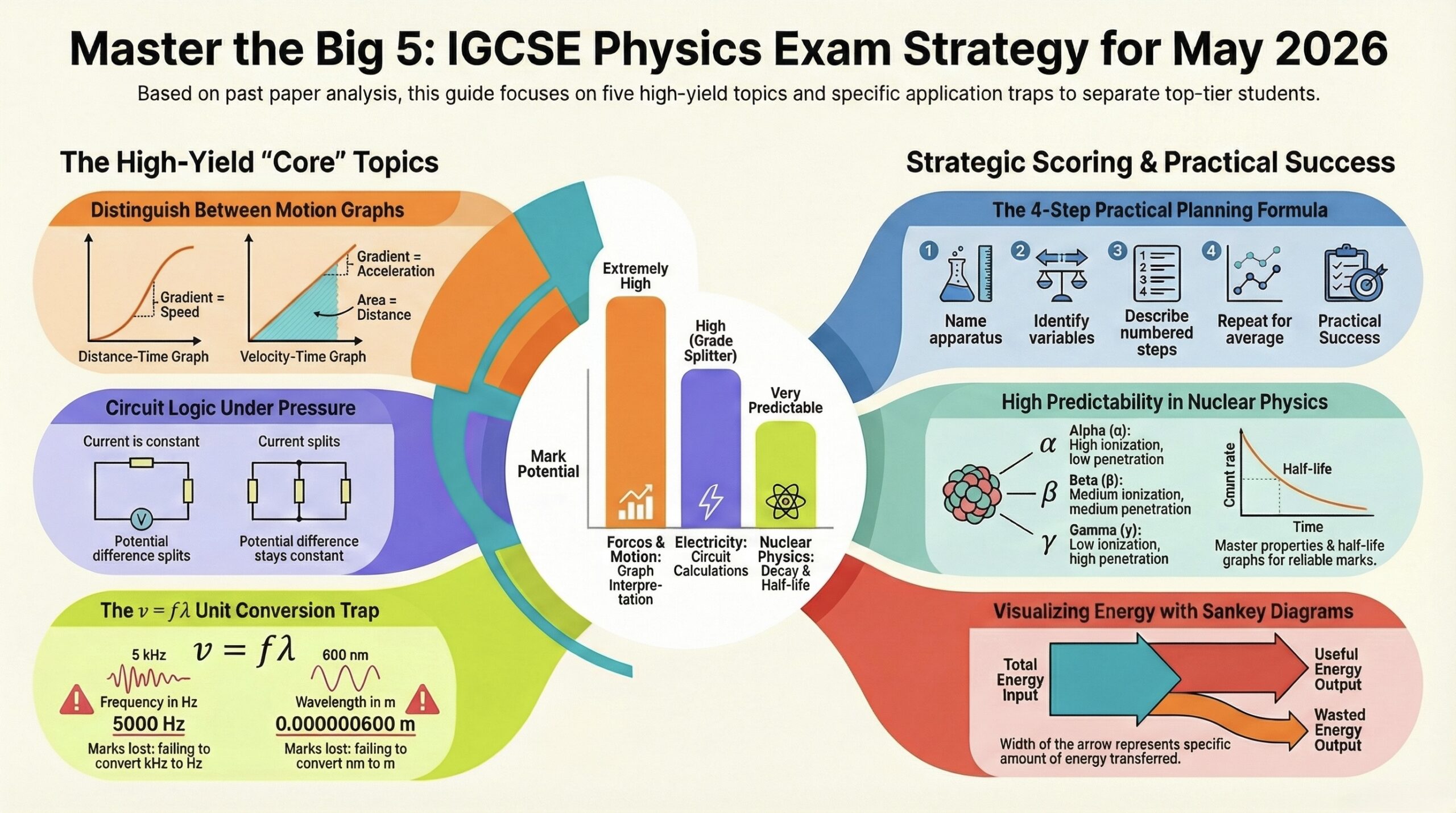
5 Powerful IGCSE Physics Topics to Master Before May
Spread the loveEight weeks out. Here are the five Physics topics most likely to cost…
-
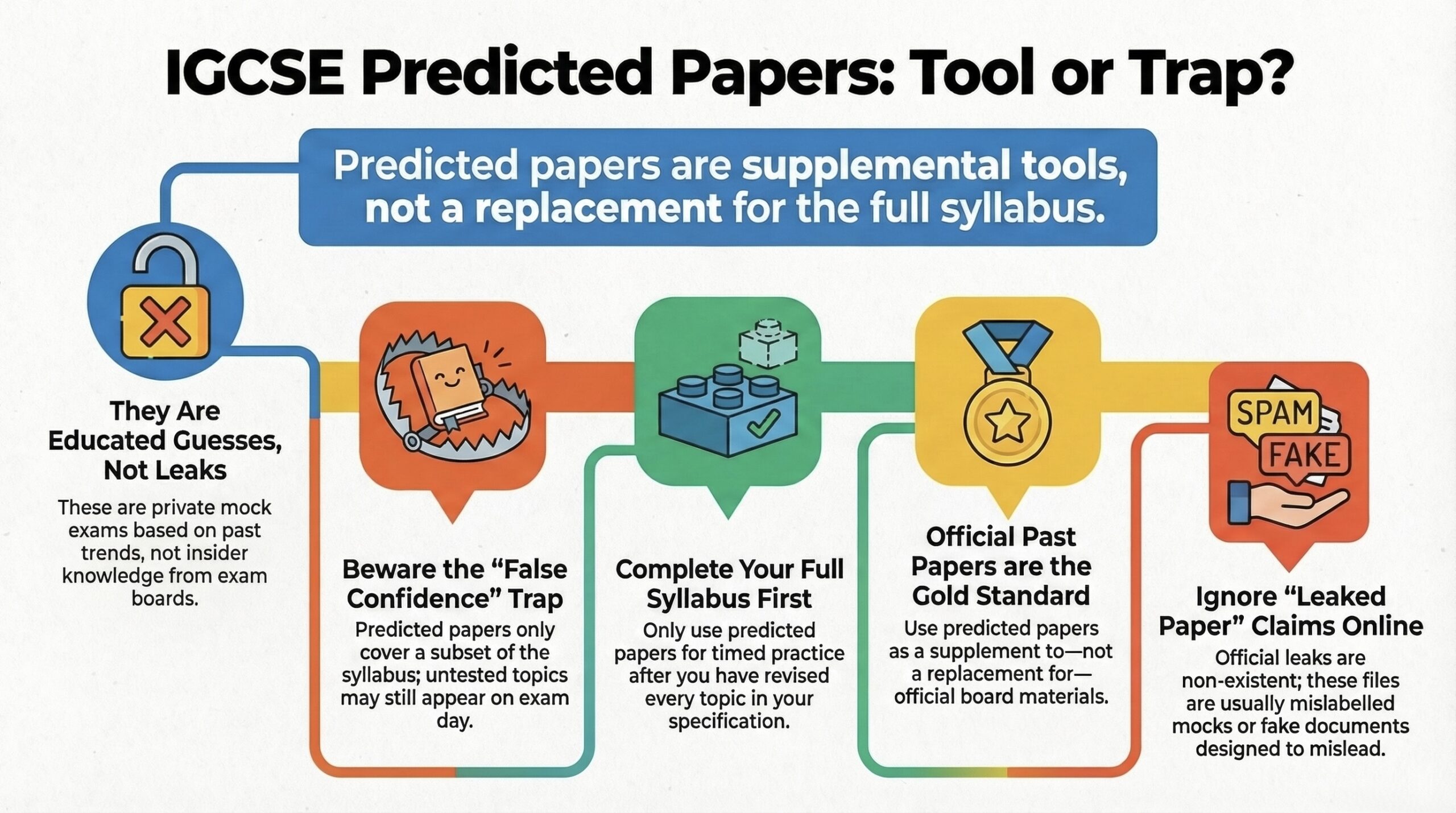
Are Predicted Papers Worth It? Honest IGCSE 2026 Truth
Spread the loveEvery student is searching for them right now. But do predicted papers actually…
-

War Abroad, Schools Closed at Home: What Pakistani Students Must Do Now
Spread the lovePunjab has shut all schools until 31 March 2026. Your exams have not…

Leave a Reply